American Aviation Historical Society
MEMBERS SHOULD LOG IN FIRST TO ACCESS FULL ARTICLES
|
Excerpts from
|
||||||
|
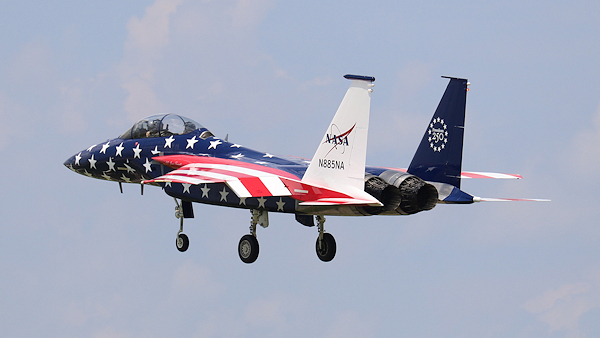
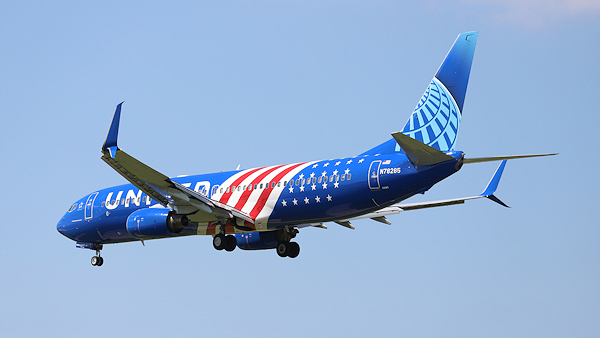
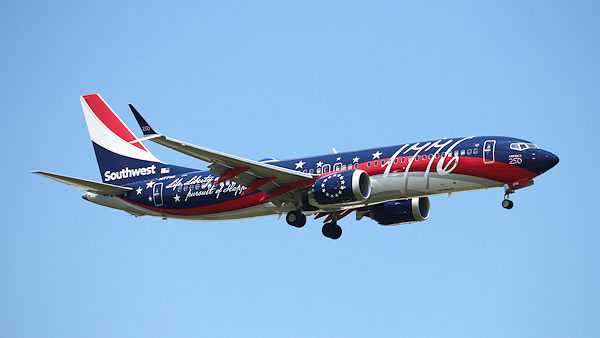
AAHS 70th Anniversary Celebration This year the AAHS is celebrating its 70th anniversary (1956 to 2026). |
|
|
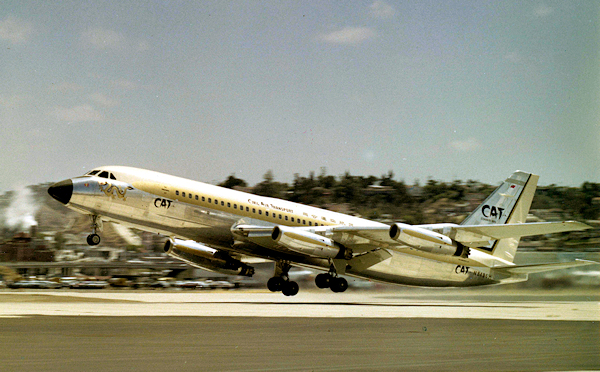
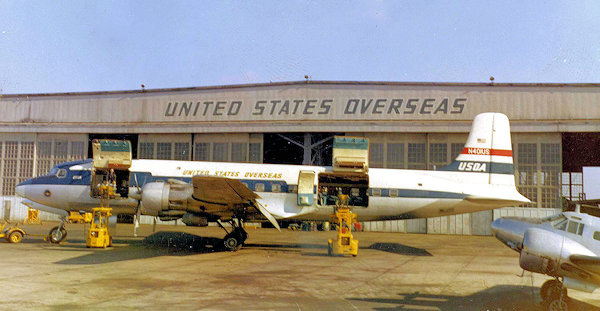
[Editor’s note: 70 years ago saw both the launch of the American Aviation Historical Society and Convair’s commercial jetliner answer to the Boeing 707 and the Douglas DC-8. The design achieved only a modicum of operational success, while nearly bankrupting the builder. This article originally appeared in the AAHS Journal, Vol 21. No. 3, Fall 1976. The fleet histories have been brought up to date, and many of the photos have been replaced with color representations Though the 880 has gone the way of the Dodo bird, the AAHS continues to soldier on.]
NEWS RELEASE-June 20, 1956 "Hughes Tool Company (of which Trans World Airlines is a subsidiary); Delta Airlines, Inc.; Convair Division of General Dynamics Corporation; and the General Electric Company have combined to bring a new jet transport plane - the world’s fastest and most advanced to the traveling public on the domestic and international routes of TWA and Delta. |
|
|
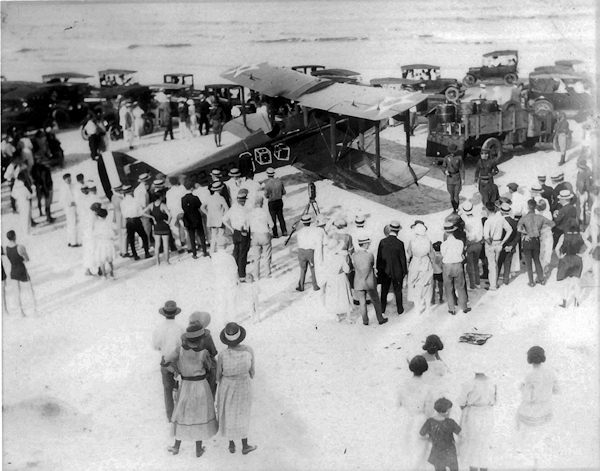
Jimmy Doolittle’s First Record Few names in the annals of American aviation history are as well-known as that of Gen. James Harold "Jimmy" Doolittle. In the course of his long career, he set records
as both a military aviator and a civilian pilot, became the first pilot to make an instruments-only flight without visual references, and famously led the first air raid against Japan during WWII, followed by his command of the Eighth Air Force. Record Seeking The end of WWI would see Jimmy Doolittle in Texas as part of the United States Army Border Air Patrol, first as a member of the 104th Aero Squadron, then with the 90th Aero Squadron. While these squadrons were headquartered primarily at Kelly Field in San Antonio and Fort Bliss in El Paso, flight elements of these and other squadrons were often assigned to outposts along the Rio Grande. Doolittle would spend time at
the outpost in Eagle Pass. While serving with the 90th, Doolittle would take the squadron’s "Lucky 7" dice emblem and later apply it to other aircraft he would fly later in his career, such as the Granville Brothers Gee Bee R-1 Super Sportster. |
|
|
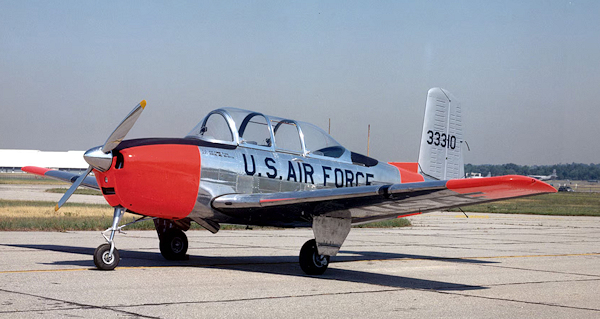
Beechcraft’s Military Bonanzas This is the second part of our series on the legendary Beech Bonanza -- the world’s longest continually produced aircraft -- whose eight-decade production came to an end early this year. This issue, we report its military role, as the "Mentor," and its iconic place in the evolution of modern military pilot training. THE TECHNOLOGY LEADERS Shortly after the end of World War II, a pair of speedy four-seaters – the V-tailed Beech Model 35 Bonanza, and its rival the North American / Ryan Navion – emerged as the first fully modern civilian light planes in large production in the United States. They were distinguished from other light planes by incorporating the full array of modern innovations that fundamentally set them apart from the prevailing design characteristics of prewar light aircraft:[18] Most other aircraft offered in the 1940s offered one or more of these innovations. Notably, most of the innovations did appear in the pre-war, two-seat Globe Swift and Erco Ercoupe. But the former lacked tricycle gear, and the latter lacked retractable gear (and the associated speed), and neither had variable-pitch propellers, let alone four seats. Only the Navion (delivered in 1946) and Bonanza (delivered in 1947) had the full array of modern features, with power and speed to match.[18,19] MILITARY MISSIONS: At about the same time, the pilot training arm of the new United States Air Force (officially formed in 1947 from the U.S. Army Air Forces) was struggling to keep up with the evolving demographics, economics, geopolitics, technologies and challenges of the rapidly changing postwar world. During the war, America’s standard pilot training sequence had looked something like this:[2,21] Each level involved faster, more-powerful, more-complex aircraft than the level before. This sequence allowed a graceful, graduated learning experience, from simple to difficult, and from (relatively) cheap planes to expensive ones (both in the price of the plane, and in their cost of operation and maintenance). This enabled the military to weed out unsuitable trainees, early on, at minimal cost.[21] |
|
|
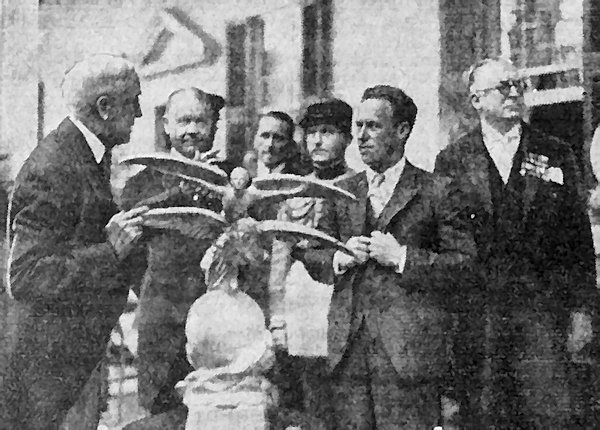
Frank Monroe Hawk’s 1931 European Tour, Part 2 Editor’s Note: Part 1 of this extensively researched article on Frank Hawk’s 1931 European Tour appeared in AAHS Journal, Vol 71, No. 1, Spring 2026. Two flights to Berlin with a Few More Journeys in Between
Hawks traded Le Bourget Airport for Croydon Airport on May 11, 1931. He added yet another European capital city to his tally on May 12, when he flew to Tempelhof Airport, in Berlin, aboard his Texaco 13. |
|
|
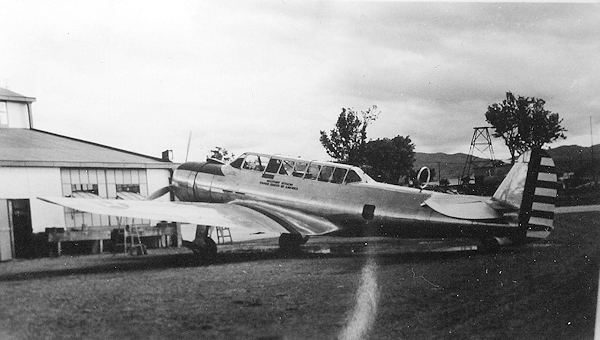
The Day the Vultee YA-19 Went to War Some readers, upon seeing the header of this account, will almost certainly be heading for the bookshelves to try to figure out or remember "what the heck is a YA-19?"
Well, there were only five YA-19s built and accepted by the Air Corps using Fiscal Year 1938 funding, yet another instance of between the wars thinking and, perhaps, hedging its bets against the similar, but smaller, Northrop A-17 series. |
|
|
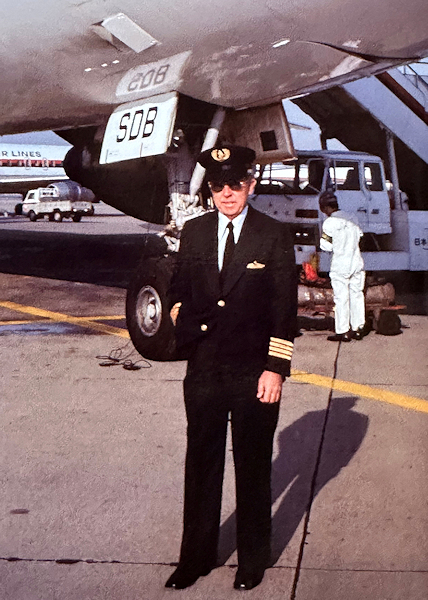
An aviation enthusiast from an early age, AAHS member, Leonard "Len" Burke had a fascinating aviation career that spanned five continents and five decades. He was a member of AAHS for over 20 years, serving as Membership administrator from 1995 to 2014. World War II After graduation from flight school, Len’s first assignment was with the Air Transport Command, ATC, ferrying aircraft from west coast factories like Consolidated Aircraft in San Diego, Douglas Aircraft in Santa Monica, and North American in Los Angeles to east coast transfer points for Europe. He flew several aircraft types, P-38 Lightnings, P-51 Mustangs, P-40 Warhawks, and B-24 Liberators to name a few. He was eventually assigned to a fighter squadron, starting in Casablanca, Morocco, in late 1943. |
|
|
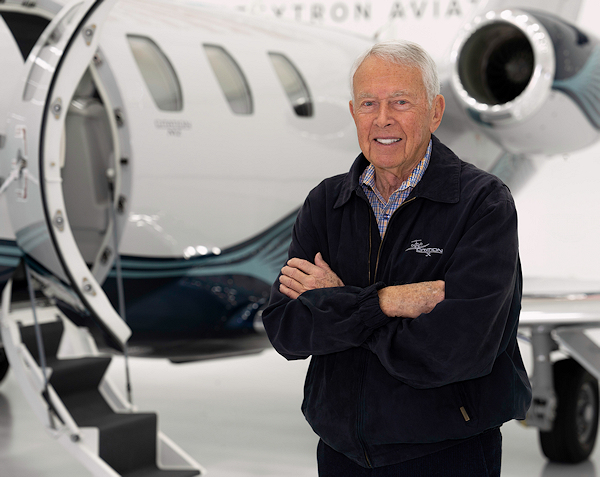
A formative titan of the modern American aviation industry, Russell W. "Russ" Meyer, Jr,, has died. The three-decade former Chairman & CEO of Cessna Aircraft (world’s largest general aviation manufacturer) – who later ascended to president of Textron Corp.’s Aircraft Sector (Bell Helicopter, Cessna, and Lycoming) – was the hand-picked successor of the man who built Cessna into the world’s General Aviation colossus: Dwane Wallace. |
|
|
Naval Air Station Wildwood Southern New Jersey, surrounded by the Atlantic Ocean and the Delaware River, was always inextricably tied to naval aviation with several air stations during World War II. The largest, and therefore most important, was Naval Air Station Wildwood. |
|
|
Two Electras in Search of Howland Island The Lockheed Model 10 Electra circled above the vast Pacific, its crew members straining their eyes in search of a small island, just two miles long and rising about 10 feet above the ocean. Rain obscured their vision and played tricks on them. Was that land? No, just raindrops clouding the endless vista. The Pratt & Whitney radials continued their steady drone, but the crew realized they didn’t have much time left before their fuel ran dangerously low. Planning the Flight Planning began in January 1967. They wanted to make the flight at the same time of year as the original attempt, and they hoped to follow Earhart’s route as closely as possible. Additional fuel tanks were needed to raise the capacity to 850 gallons, along with fuel and oil transfer systems, as well as state-of-the-art communication and navigation equipment. For that they would need to find sponsors. Earhart had benefited . . . |
|
|
AAHS Journal Vol 71, No 1, "Boys & Their Toys!! Contemporary Die-Cast Aircraft/Banks The "Toys" article was a fun, if frivolous, read. And yet, as I thought about it, I’ve noticed that those "collectables" generated a remarkable amount of interest in aviation history among people who, otherwise, hitherto, had little or no interest in the topic. AAHS Vol 70 No 3 (Fall 2025), page 230 "Forum of Flight"
The Lockheed L-749A picture taken in January 1977 is in fact N6021C – the longest surviving 749A (out of the fleet of 40 749/749A Constellations) formerly operated by Trans World Airlines (TWA). The aircraft still wears the remnants of the TWA red cheat-line. |
|
|
We’ve had the good fortune to have the expertise and support of many aviation enthusiasts in our goal of history preservation. Life priorities change, though, and both Tyson Smith, AAHS President, and Klara Smith (our bookkeeper) have had to step back from AAHS efforts, to support their personal business goals. Tyson and Klara helped greatly in several efforts these last two years, including streamlining our bookkeeping, the design of our future website, and the redesign of the AAHS building. We’re looking forward to days ahead when Tyson and Klara can enjoy the fruits of their labors with the rest of the AAHS membership! |
|