American Aviation Historical Society
MEMBERS SHOULD LOG IN FIRST TO ACCESS FULL ARTICLES
|
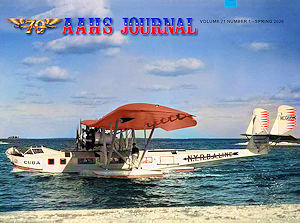
AAHS 70th Anniversary Celebration This year the AAHS is celebrating its 70th anniversary (1956 to 2026). |
|
|
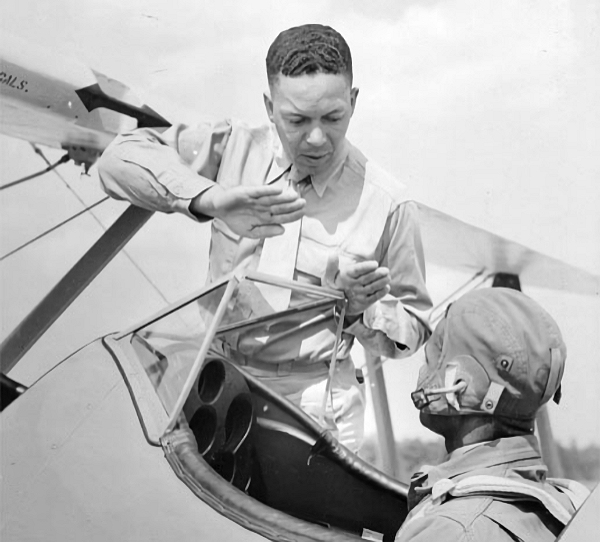
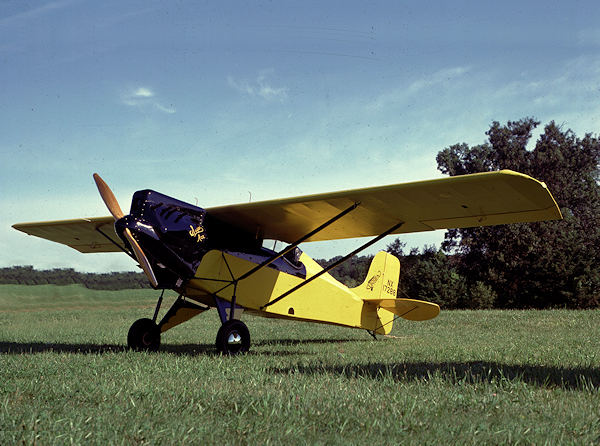
The Little Known Story of "Chief" Anderson’s Air Transport License C. Alfred Anderson has been described as "The Father of Black Aviation."[1] There are many myths and legends in circulation about his training, but until recently no one knew the actual story. From July 1930 to February 1932, Anderson trained to obtain an Air Transport License (ATL), enabling him to ?y as a commercial pilot and to train others. Anderson went on to become the Chief Flight Instructor for the Tuskegee Airmen, a Black group of pilots who demonstrated exemplary performance in combat.[2] Anderson’s Air Transport License was issued in February 1932. This article reviews the context of Black aviation in the late 1920s and early 1930s. It is the context that makes Anderson’s achievement stand out. The resolve both Anderson and his trainer exhibited are like two pro?les in courage. Much of the information presented here has never before been pulled together. Black Aviators in the 1930s Allowing Black pilots into the fraternity of aviators was not popular and many well-respected ?iers opposed it. Most notably, Charles Lindbergh made public statements to the effect that Blacks could never be able to learn to ?y well enough. Even years later, in 1961, Chuck Yeager opposed allowing Black candidates into the space program.[3] In the 1920s and 1930s there were few trainers in the U.S. willing to work with Black candidates. The uncommonness of the kind of courage it took to provide professional-level training to a Black pilot is implied by the fact that in the decade following the granting of the ATL to Anderson, in spite of interest and talent, only six more Black pilots in the entire United States were allowed to advance to the top rating. The CAA (Civil Aeronautics Authority) did not issue the transport license after November 1, 1937. After that, the top license was commercial. The following list gives the license number, name, community of residence, and year the license was earned when known. In the list, license numbers do not relate to the chronological order in which Black candidates received their transport or commercial licenses. Instead, the numbers follow the order in which they received their private licenses. Of the pilots listed, Renfro is fourth on the list but was the third to earn the ATL, and Coffey, number six on the list, was the fourth to earn the ATL. Renfro and Coffey received the ATL in 1936 — a gap of about four years after Anderson and Green. Allen held a “limited commercial” license until about 1940, then upgraded to commercial. Terry held a private license, and Ashe held a Student license until about 1940. •?7638 Charles A. Anderson, Bryn Mawr, PA (1932) By 1940, in addition to the pilots listed above, two pilots held the limited commercial license. •?30217 Grover C. Nash, Chicago, IL When this list was compiled and published by the Bureau of the Census, the Bureau explained that they relied on information provided by the CAA and they admitted that there may have been omissions. It is not known how many omissions there may be to the list, but one omission that is known is Lewis Albert Jackson, license number 38719. Jackson learned to ?y in 1932, and the ?rst license examination he sat for was for the transport license. This was in 1937.[4] As far as I can learn, he never obtained a private or limited commercial license, and this may be the reason he was overlooked in the Census Bureau list. In 1942, Jackson, then holding the commercial license, obtained an instrument rating. He believed he might have been the ?rst Black pilot to have been so rated. The Tuskegee Experiment The “Tuskegee Experiment” was set up to see if it was possible to train Black pilots for military service. Incredible now, the Army’s of?cial policy stated that Blacks were too physically slow and mentally incapable to learn to ?y airplanes. It was for these reasons that training Blacks to be military pilots was considered to be an “experiment.” The fact was, though, . . .
|
|
|
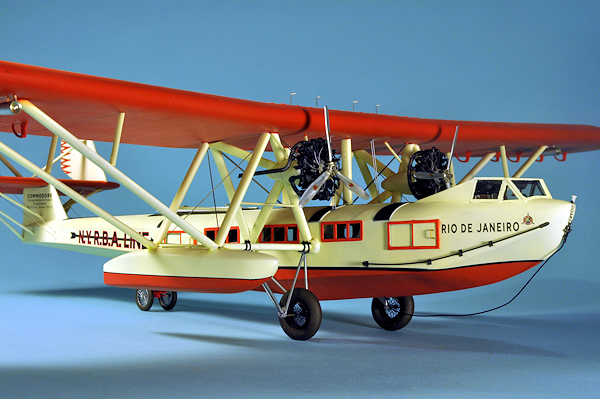
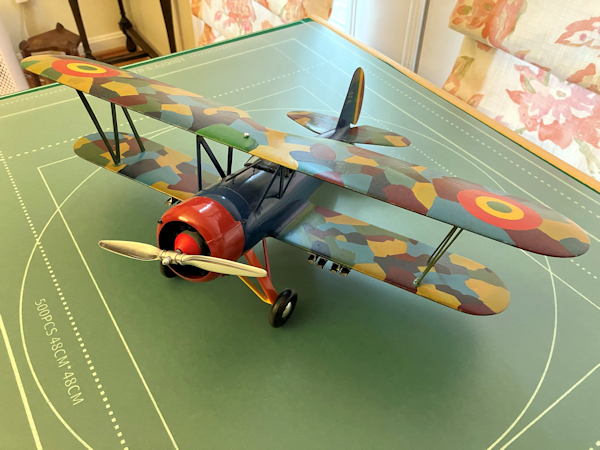
The Consolidated Model 16 Commodore...Mini Version I have a suspicion. I suspect that someone reading this actually once built a model airplane. There was a survey done back in the Apollo days that asked the astronauts if they ever built a model. All of them responded “Yes.” Maybe us mere mortals did too. I know I did. And still do.
Part of that suspicion is that this publication has been seen by, dare I say, thousands of model building fellow readers. Yet, going back to that first issue of the AAHS Journal on my shelves (back to 1956), I can’t ever recall seeing a single example or article about "model building" in these pages.1 Personally, I think that’s a shame, as there is so much we AAHS "historians" have in common with model builders. Both groups enjoy the historic record. Historians, to learn the stories, modelers to help to “get it right,” and view it in three dimensions. |
|
|
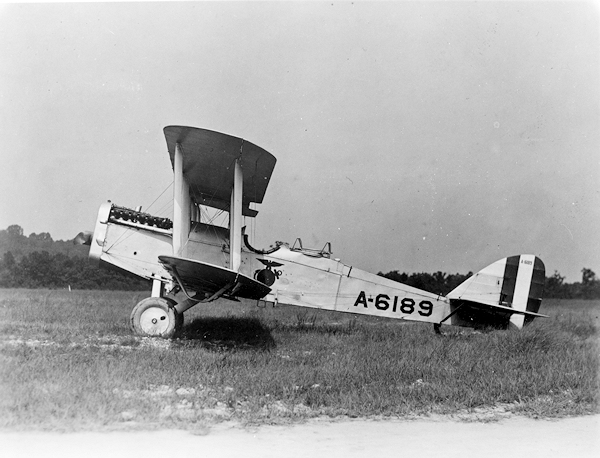
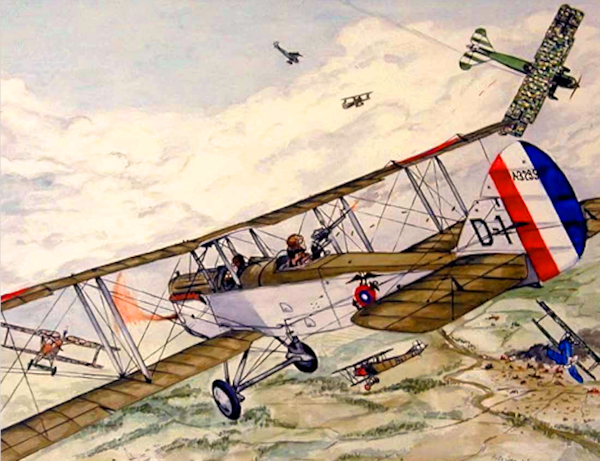
Two pioneers of Marine Corps aviation, one a Marine Corps aviator and the other his observer-gunner, during the closing days of WWI, demonstrated such heroism and tenacity in the face of overwhelming odds that they received the only two Medals of Honor awarded to Marine Corps airmen during the war. The heroic actions of Second Lieutenant Ralph Talbot, USMCR, and Corporal Robert G. Robinson, USMCR, occurred 29 days before the signing of the Armistice on November 11, 1918. They were at the Western Front for only two and a half months. These two young men who flew together could not have been more different in their personalities and personal backgrounds, yet together they became a formidable opponent in combat. Ralph Talbot’s Early Years Ralph Talbot (called Dick by his friends) was born on January 6, 1897 in South Weymouth, Mass., just outside Boston. His talents became evident early in his teenage years. While in high school he excelled in English, History, French and German. He was very good in sports, especially baseball, and was a good marksman. At 5’9.5" and 145 lbs. he appeared to be lean and agile, just about right for athletics. The duPont Flying School Talbot’s Commission application clearly reveals his keen interest and experience in aviation as an area which he determined he most excelled. He had about 16.5 hours in the air under instruction at the duPont Flying School in Delaware in the summer of 1917, occurring after his first year at Yale. He listed . . . |
|
|
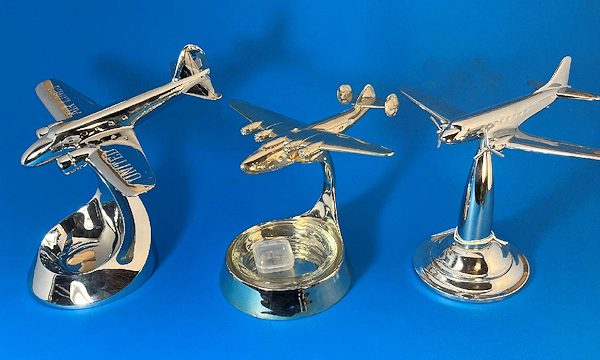
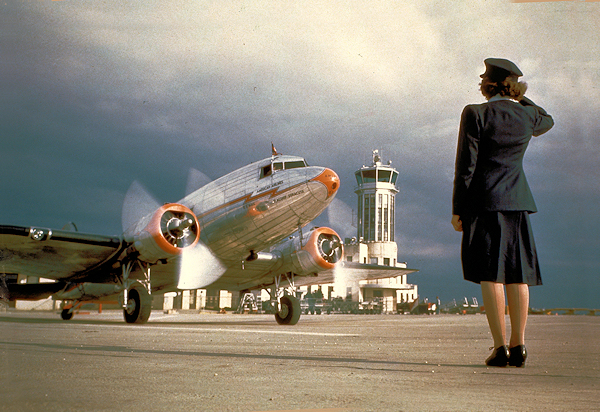
Enhancing the Aviation Mancave with Vintage Bling The golden age of commercial aviation ran roughly between 1927 and 1967 with the glamorous period being 1935 to 1965. In those 30 years the whole of the aviation industry used whatever means possible to engage sales prospects from airline passengers to military decision makers. We can thank Charles Lindbergh, a host of aviation "firsts," National Air Racing, and dazzling aerobatic displays to whet the imagination of young and old. Amongst the promotional materials used were aircraft desk models and airplane ashtrays. |
|
|
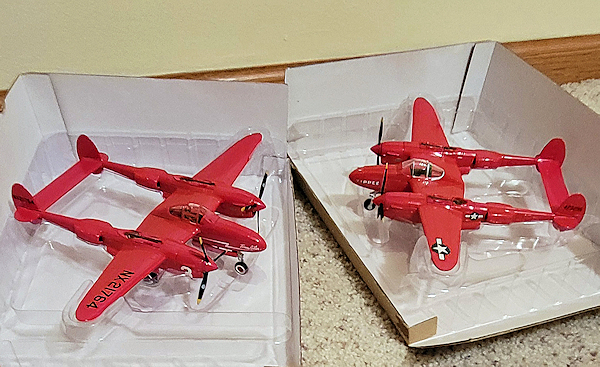
Boys & Their Toys!! Contemporary Die-Cast Aircraft/Banks I really enjoyed reading Scott Fisher’s Priceless Memories in the Fall 2025 issue of the AAHS?Journal. Scott and I have known each other for a long time, and he served on the Board of the Air Power Museum here at Antique Airfield for several years. |
|
|
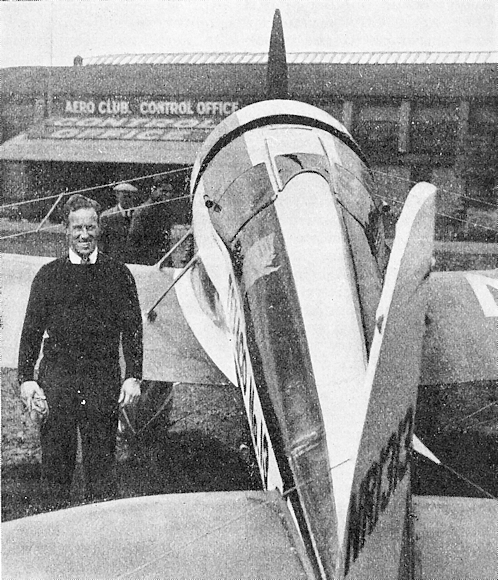
Frank Hawk’s 1931 European Tour, Part 1 To quote the April 1931 issue of U.S. Air Services, the monthly magazine of the Army and Navy Air Service Association: Captain Hawks and that Texaco 13 Frank Monroe Hawks was born in Marshalltown, Iowa, northeast of Des Moines, on March 28, 1897. His parents moved a few times over the following years before settling down in California, in Long Beach to be more precise, around September 1915. |
|
|
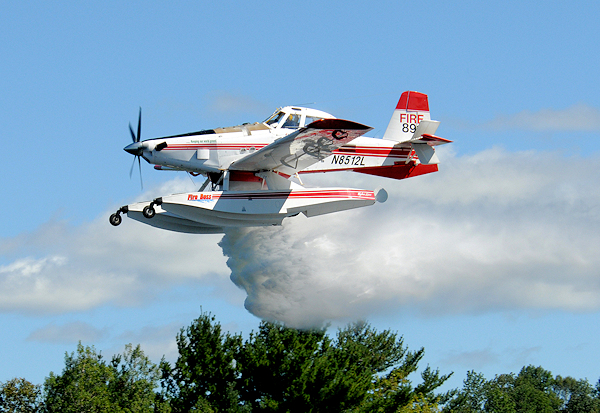
Georgeg Page’s Curtiss Osprey? The article in the Spring 2025 AAHS Journal (Vol.70, No.1), dedicated to one of America’s unsung aeronautical heroes, George A. Page, Jr., was both a pleasant surprise and, in a manner that could not possibly have been predicted, timely. |
|
|
Winter 2025, Vol. 70, No. 4 - The Caterpillar Club The Caterpillar Club story was good - but thin. Many years ago I read Jump, Tales of the Caterpillar Club and was mesmerized by the stories the author told. It would have been good for you to include a few of those in your piece. Particularly memorable for me was the WWII Lancaster crew member who found himself falling through a moonless night sky without a parachute after his aircraft was hit in the bomb bay by anti-aircraft fire. During the fall, he bumped into something and immediately grabbed it - only to discover it was another crew member who was just pulling the D-ring on his parachute. The two descended together and both lived to tell the tale. Winter 2025, Vol. 70. No. 4 - Watson’s Whizzers and Operation PAPERCLIP There is a lot I could tell you about Isolde Baur’s "Watson’s Whizzers" story, which was actually much more about her husband Karl than about the "Whizzers." Many years ago, maybe 30 or so years after Karl had died, Isolde called me out of the blue and asked if I could meet with her to discuss her husband’s memorabilia collection from his years with Messerschmitt during WWII. At the time, both Isolde and I lived in Arlington, Tex.,so we were within minutes of each other. |
|
|
This issue of the Forum features photos from two member collections, Job Conger and Joseph G. Handleman. Both long time active members of the Society. Joseph has been a regular contributor over the years as has Job. Unfortunately, Job passed away last Fall and his collection has come to the AAHS for safe keeping. The Society has thousands of images in need of cataloging. You can help by volunteering to assist in cataloging from your on home. Interested in helping? Go to www.AAHSPlaneSpotter.com and check the system out. The FORUM is presented as an opportunity for each member to participate in the Journal by submitting interesting or unusual photographs. Most of the images come from contributions to the AAHS archives. Unfortunately, with older images the contributor information has been lost. Where known, we acknowledge them. |
|
|
"The only constant in life is change." As any long-standing organization, we’ve had to learn to adapt to the new world we continually find ourselves in, or be left behind on the ground. Fortunately, we have an extraordinary team of dedicated helpers at AAHS HQ that work tirelessly to keep our technology and processes reasonably up to date. |